
Linux power supply class(1)_软件架构及API汇整
1. 前言
power supply class为编写供电设备(power supply,后面简称PSY)的驱动提供了统一的框架,功能包括:
1)抽象PSY设备的共性,向用户空间提供统一的API。
2)为底层PSY驱动的编写,提供简单、统一的方式。同时封装并实现公共逻辑,驱动工程师只需把精力集中在和硬件相关的部分即可。
本文将从设计思路、软件架构、API说明以及怎么编写power supply driver四个角度,介绍power supply class。并会在下一篇文章中,分析power supply class的内部逻辑。如果有时间,会在第三篇文章中,以android系统为例,介绍应用软件怎样利用power supply class,监控系统的供电状态。
注:其实所有的class(如input subsystem),思路都是这样的—-抽象共性、统一接口、屏蔽细节。我们在“Linux设备模型(7)_Class”中介绍过,本文在介绍power supply class同时,也以此为例,进一步理解设备模型中class的存在意义和使用方法。
2. 设计思路
先来回答一个问题:kernel中设备驱动的目的,是管理设备,并提供给用户空间程序使用,那么对PSY设备而言,kernel要管理什么?用户空间程序要使用什么?
其实PSY设备是一个特例,它的目的很单纯,就是为系统供电。如果只考虑这个目的,就不需要任何驱动了,但情况会稍微复杂,因为:
1)PSY设备可能是电池设备(battery,这在嵌入式系统中很常见),这会引申出电量检测、充电管理等多个议题。
此时,PSY driver需要管理的事情包括:检测电池类型;检测电池电量;检测充电状态;等等。而用户空间程序则需要将检测到的结果,显示给用户。
2)系统中可能有多个PSY设备,这些设备还可能有级联关系,如有些平板电脑中,可能同时存在DC-charger、USB-charger和battery三个供电设备,其中DC-charger和USB-charger可能会给battery供电,再由battery向系统供电。
此时,PSY driver需要管理的事情包括:获取外部供电设备的连接状态;充电状态;等等。同样,用户空间程序需要将这些信息显示给用户。
那么,共性已经总结出来了:PSY driver的主要功能,就是向用户空间程序汇整各类状态信息。因此,power supply class的核心思路就是:
将这些状态信息,抽象为“属性(properties)”。由于状态信息的类型是有限的,properties的个数也是有限的。
PSY driver只需要负责:该PSY设备具有哪些“属性”;这些“属性”的“值(value)”是什么;当“属性值”发生改变时,通知power supply class。
power supply class负责:将某个PSY设备支持的属性及其value,以sysfs的形式,提供给用户空间;当属性值改变时,以uevent的形式,广播给用户空间程序。
另外,power supply class也会协助处理PSY级联的情况(后面会详细描述)。
3. 软件架构和API汇整
3.1 软件架构
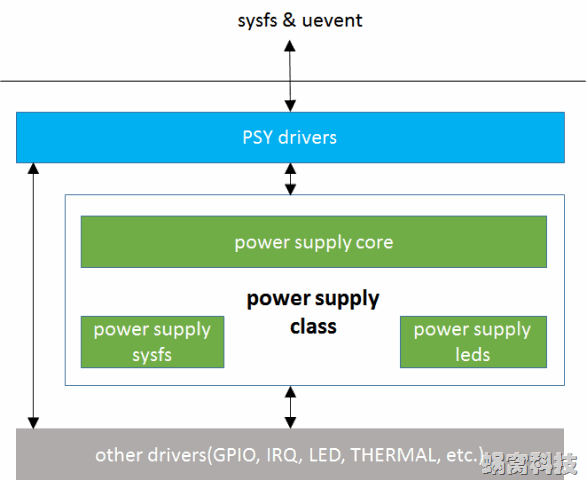
power supply class位于drivers/power/目录中,主要由3部分组成(可参考下图的软件架构):
1)power supply core,用于抽象核心数据结构、实现公共逻辑。位于drivers/power/power_supply_core.c中。
2)power supply sysfs,实现sysfs以及uevent功能。位于drivers/power/power_supply_sysfs.c中。
3)power supply leds,基于linux led class,提供PSY设备状态指示的通用实现。位于drivers/power/power_suppply_leds.c中。
最后,驱动工程师可以基于power supply class,实现具体的PSY drivers,主要处理平台相关、硬件相关的逻辑。这些drivers都位于drivers/power/目录下。
3.2 核心数据结构
1)struct power_supply
struct power_supply为power supply class的核心数据结构,用于抽象PSY设备。其定义如下:
1: /* include/linux/power_supply.h */ 2: struct power_supply { 3: const char *name; 4: enum power_supply_type type; 5: enum power_supply_property *properties; 6: size_t num_properties; 7:
8: char **supplied_to; 9: size_t num_supplicants; 10:
11: char **supplied_from; 12: size_t num_supplies; 13: struct device_node *of_node; 14:
15: int (*get_property)(struct power_supply *psy, 16: enum power_supply_property psp, 17: union power_supply_propval *val); 18: int (*set_property)(struct power_supply *psy, 19: enum power_supply_property psp, 20: const union power_supply_propval *val); 21: int (*property_is_writeable)(struct power_supply *psy, 22: enum power_supply_property psp); 23: void (*external_power_changed)(struct power_supply *psy); 24: void (*set_charged)(struct power_supply *psy); 25:
26: /* For APM emulation, think legacy userspace. */ 27: int use_for_apm; 28:
29: /* private */ 30: struct device *dev; 31: struct work_struct changed_work; 32: spinlock_t changed_lock; 33: bool changed; 34: #ifdef CONFIG_THERMAL 35: struct thermal_zone_device *tzd; 36: struct thermal_cooling_device *tcd; 37: #endif 38:
39: #ifdef CONFIG_LEDS_TRIGGERS 40: struct led_trigger *charging_full_trig; 41: char *charging_full_trig_name; 42: struct led_trigger *charging_trig; 43: char *charging_trig_name; 44: struct led_trigger *full_trig; 45: char *full_trig_name; 46: struct led_trigger *online_trig; 47: char *online_trig_name; 48: struct led_trigger *charging_blink_full_solid_trig; 49: char *charging_blink_full_solid_trig_name; 50: #endif 51: };name,该PSY的名称;
type,该PSY的类型,枚举型,包括:battery、USB charger等等(后面会详细介绍);
properties,该PSY具有的属性列表,枚举型(后面会详细介绍);
num_properties,属性的个数;
supplied_to,一个字符串数组,保存了由该PSY供电的PSY列表,以此可将PSY组织成相互级联的PSY链。这些“被供电”的PSY,称作supplicant(客户端、乞求者);
num_supplicants, supplicant的个数;
supplied_from,一个字符串数组,保存了向该PSY供电的PSY列表,也称作supply(提供者)。从另一个方向,组织PSY之间的级联关系;
num_supplies,supply的个数;
get_property/set_property,PSY driver需要重点实现的两个回调函数,用于获取/设置属性值;
property_is_writeable,返回指定的属性值是否可写(用于sysfs);
external_power_changed,当一个PSY设备存在supply PSY,且该supply PSY的属性发生改变(如online、offline)时,power supply core会调用该回调函数,通知PSY driver,以便让它做出相应的处理;
set_charged,该回调函数的应用场景有点奇怪:外部模块通知PSY driver,该PSY设备的状态改变了。自己改变了自己不知道,要外部通知,希望大家在实际工作中不要遇到,不然太纠结了;
changed_work/changed_lock/changed,一个用于处理状态改变的workqueue,主要思路是:当该PSY的状态发生改变,启动一个workqueue,查询并通知所有的supplicants;
tzd/tcd,如果该PSY具有温度等属性,则需要借助linux generic thermal sysfs drivers(温控子系统)的框架,注册相应的thermal设备,后面会详细介绍;
led triggers,如果配置了CONFIG_LEDS_TRIGGERS,则调用linux led class的接口,注册相应的LED设备,用于PSY状态指示;
dev/of_node,用于保存device、of_node等指针。
2)PSY类型
PSY类型由enum power_supply_type定义:
1: enum power_supply_type { 2: POWER_SUPPLY_TYPE_UNKNOWN = 0, 3: POWER_SUPPLY_TYPE_BATTERY, 4: POWER_SUPPLY_TYPE_UPS, 5: POWER_SUPPLY_TYPE_MAINS, 6: POWER_SUPPLY_TYPE_USB, /* Standard Downstream Port */ 7: POWER_SUPPLY_TYPE_USB_DCP, /* Dedicated Charging Port */ 8: POWER_SUPPLY_TYPE_USB_CDP, /* Charging Downstream Port */ 9: POWER_SUPPLY_TYPE_USB_ACA, /* Accessory Charger Adapters */ 10: };POWER_SUPPLY_TYPE_UNKOWN,未知;
POWER_SUPPLY_TYPE_BATTERY,电池,嵌入式设备、手持式智能设备常用的供电形式;
POWER_SUPPLY_TYPE_UPS,Uninterruptible Power System/Uninterruptible Power Supply,不间断式供电设备,通过将交流电和蓄电池连接,正常情况下由交流电供电,同时向蓄电池充电。当交流电断电时,由蓄电池紧急供电。一般用于服务器等设备;
POWER_SUPPLY_TYPE_MAINS,主供电设备,如笔记本电脑的适配器,其特点是可以单独供电,当其断电时,再由辅助供电设备供电(如battery);
POWER_SUPPLY_TYPE_USB/POWER_SUPPLY_TYPE_USB_DCP
/POWER_SUPPLY_TYPE_USB_CDP/POWER_SUPPLY_TYPE_USB_ACA,USB类型的供电,不同点在于充电电流的限制,由USB Battery Charge Spec规定,具体可参考USB组织的规范,或者参考这个链接(http://www.cash.idv.tw/wordpress/?p=8334,由于是台湾博客,被和谐了,呵呵呵!感兴趣的同学可以找我要)。
3)PSY属性
power supply class将所有可能PSY属性,以枚举型变量(enum power_supply_property )的形式抽象出来,PSY driver可以根据设备的实际情况,从中选取一些。
1: enum power_supply_property { 2: /* Properties of type `int' */ 3: POWER_SUPPLY_PROP_STATUS = 0, 4: POWER_SUPPLY_PROP_CHARGE_TYPE, 5: POWER_SUPPLY_PROP_HEALTH, 6: POWER_SUPPLY_PROP_PRESENT, 7: POWER_SUPPLY_PROP_ONLINE, 8: POWER_SUPPLY_PROP_AUTHENTIC, 9: POWER_SUPPLY_PROP_TECHNOLOGY, 10: POWER_SUPPLY_PROP_CYCLE_COUNT, 11: POWER_SUPPLY_PROP_VOLTAGE_MAX, 12: POWER_SUPPLY_PROP_VOLTAGE_MIN, 13: POWER_SUPPLY_PROP_VOLTAGE_MAX_DESIGN, 14: POWER_SUPPLY_PROP_VOLTAGE_MIN_DESIGN, 15: POWER_SUPPLY_PROP_VOLTAGE_NOW, 16: POWER_SUPPLY_PROP_VOLTAGE_AVG, 17: POWER_SUPPLY_PROP_VOLTAGE_OCV, 18: POWER_SUPPLY_PROP_VOLTAGE_BOOT, 19: POWER_SUPPLY_PROP_CURRENT_MAX, 20: POWER_SUPPLY_PROP_CURRENT_NOW, 21: POWER_SUPPLY_PROP_CURRENT_AVG, 22: POWER_SUPPLY_PROP_CURRENT_BOOT, 23: POWER_SUPPLY_PROP_POWER_NOW, 24: POWER_SUPPLY_PROP_POWER_AVG, 25: POWER_SUPPLY_PROP_CHARGE_FULL_DESIGN, 26: POWER_SUPPLY_PROP_CHARGE_EMPTY_DESIGN, 27: POWER_SUPPLY_PROP_CHARGE_FULL, 28: POWER_SUPPLY_PROP_CHARGE_EMPTY, 29: POWER_SUPPLY_PROP_CHARGE_NOW, 30: POWER_SUPPLY_PROP_CHARGE_AVG, 31: POWER_SUPPLY_PROP_CHARGE_COUNTER, 32: POWER_SUPPLY_PROP_CONSTANT_CHARGE_CURRENT, 33: POWER_SUPPLY_PROP_CONSTANT_CHARGE_CURRENT_MAX, 34: POWER_SUPPLY_PROP_CONSTANT_CHARGE_VOLTAGE, 35: POWER_SUPPLY_PROP_CONSTANT_CHARGE_VOLTAGE_MAX, 36: POWER_SUPPLY_PROP_CHARGE_CONTROL_LIMIT, 37: POWER_SUPPLY_PROP_CHARGE_CONTROL_LIMIT_MAX, 38: POWER_SUPPLY_PROP_INPUT_CURRENT_LIMIT, 39: POWER_SUPPLY_PROP_ENERGY_FULL_DESIGN, 40: POWER_SUPPLY_PROP_ENERGY_EMPTY_DESIGN, 41: POWER_SUPPLY_PROP_ENERGY_FULL, 42: POWER_SUPPLY_PROP_ENERGY_EMPTY, 43: POWER_SUPPLY_PROP_ENERGY_NOW, 44: POWER_SUPPLY_PROP_ENERGY_AVG, 45: POWER_SUPPLY_PROP_CAPACITY, /* in percents! */ 46: POWER_SUPPLY_PROP_CAPACITY_ALERT_MIN, /* in percents! */ 47: POWER_SUPPLY_PROP_CAPACITY_ALERT_MAX, /* in percents! */ 48: POWER_SUPPLY_PROP_CAPACITY_LEVEL, 49: POWER_SUPPLY_PROP_TEMP, 50: POWER_SUPPLY_PROP_TEMP_MAX, 51: POWER_SUPPLY_PROP_TEMP_MIN, 52: POWER_SUPPLY_PROP_TEMP_ALERT_MIN, 53: POWER_SUPPLY_PROP_TEMP_ALERT_MAX, 54: POWER_SUPPLY_PROP_TEMP_AMBIENT, 55: POWER_SUPPLY_PROP_TEMP_AMBIENT_ALERT_MIN, 56: POWER_SUPPLY_PROP_TEMP_AMBIENT_ALERT_MAX, 57: POWER_SUPPLY_PROP_TIME_TO_EMPTY_NOW, 58: POWER_SUPPLY_PROP_TIME_TO_EMPTY_AVG, 59: POWER_SUPPLY_PROP_TIME_TO_FULL_NOW, 60: POWER_SUPPLY_PROP_TIME_TO_FULL_AVG, 61: POWER_SUPPLY_PROP_TYPE, /* use power_supply.type instead */ 62: POWER_SUPPLY_PROP_SCOPE, 63: POWER_SUPPLY_PROP_CHARGE_TERM_CURRENT, 64: POWER_SUPPLY_PROP_CALIBRATE, 65: /* Properties of type `const char *' */ 66: POWER_SUPPLY_PROP_MODEL_NAME, 67: POWER_SUPPLY_PROP_MANUFACTURER, 68: POWER_SUPPLY_PROP_SERIAL_NUMBER, 69: };属性值相当多,考虑到篇幅问题,本文只列举几个(它们也是power supply sysfs支持的属性),其它的大家可以自行理解。
POWER_SUPPLY_PROP_STATUS,该PSY的status,主要是充电状态,包括:“Unknown”, “Charging”, “Discharging”, “Not charging”, “Full”,由枚举型变量(POWER_SUPPLY_STATUS_*)定义。根据设计方案的不同,充电类型的PSY,或者battery类型的PSY,都可能具备该属性;
POWER_SUPPLY_PROP_CHARGE_TYPE,充电类型,包括:“Unknown”, “N/A”, “Trickle”, “Fast”,由枚举型变量(POWER_SUPPLY_CHARGE_TYPE_*)定义;同理根据设计方案的不同,充电类型的PSY,或者battery类型的PSY,都可能具备该属性;
POWER_SUPPLY_PROP_HEALTH,“健康”情况,包括:“Unknown”, “Good”, “Overheat”, “Dead”, “Over voltage"等等, 由枚举型变量(POWER_SUPPLY_HEALTH_*)定义。一般用于battery类型的PSY;
POWER_SUPPLY_PROP_TECHNOLOGY,采用的技术,包括:“Unknown”, “NiMH”, “Li-ion”, “Li-poly”, “LiFe”, “NiCd”, “LiMn”,由枚举型变量(POWER_SUPPLY_TECHNOLOGY_*)定义。一般用于battery类型的PSY;
POWER_SUPPLY_PROP_CAPACITY_LEVEL,容量,包括:“Unknown”, “Critical”, “Low”, “Normal”, “High”, “Full”,由枚举型变量(POWER_SUPPLY_CAPACITY_LEVEL_*)定义。一般用于battery类型的PSY;
POWER_SUPPLY_PROP_TYPE,PSY类型,比较特殊,保存在“psy->type”变量中,而不在properties数组中。
3.3 向具体的PSY driver提供的API
power supply class首要任务,是向PSY driver提供统一的驱动编写接口,主要包括:
1)PSY的register/unregister API
1: extern int power_supply_register(struct device *parent,
2: struct power_supply *psy);
3: extern int power_supply_register_no_ws(struct device *parent,
4: struct power_supply *psy);
5: extern void power_supply_unregister(struct power_supply *psy);其中power_supply_register和power_supply_register_no_ws的区别是:power_supply_register注册的PSY,具备wakeup系统的能力,而power_supply_register_no_ws不具备。
2)PSY状态改变时通知power supply core的API
1: extern void power_supply_changed(struct power_supply *psy);当PSY driver检测到该设备某些属性值改变时,需要调用这个接口,通知power supply core,power supply core会有如下动作:
如果该PSY是其它PSY的供电源,调用这些PSY的external_power_changed回调函数,通知它们(这些PSY具体要做些什么,由它们的自身逻辑决定);
如果配置了CONFIG_LEDS_TRIGGERS,调用power_supply_update_leds,更新该PSY有关的led状态;
发送notifier,通知那些关心PSY设备状态的drivers;
以统一的格式,向用户空间发送uevent(这就是设备模型中class的魅力,对外接口由class core提供,可以节省driver的工作量,同时确保了接口的一致性)。
3)其它杂项接口
1: extern struct power_supply *power_supply_get_by_name(const char *name);
2: extern struct power_supply *power_supply_get_by_phandle(struct device_node *np,
3: const char *property);
4: extern int power_supply_am_i_supplied(struct power_supply *psy);
5: extern int power_supply_set_battery_charged(struct power_supply *psy);
6: extern int power_supply_is_system_supplied(void);
7: extern int power_supply_powers(struct power_supply *psy, struct device *dev);power_supply_get_by_name,通过名字获取PSY指针。
power_supply_get_by_phandle,从DTS中,解析出对应dePSY指针(后面会详细介绍)。
power_supply_am_i_supplied,查询自己是否由其它PSY供电。
power_supply_set_battery_charged,调用指定PSY的set_charged回调。
power_supply_is_system_supplied,查询系统是否有有效的或者处于online状态的PSY,如果没有,可能为桌面系统。
power_supply_powers,在指定设备(通常是该PSY设备)的sysfs目录(/sys/devices/xxx/)下,创建指定PSY的符号链接(/sys/devices/xxx/powers)。
3.4 向其它driver提供的用于接收PSY状态改变notifier的API
1: extern int power_supply_reg_notifier(struct notifier_block *nb);
2: extern void power_supply_unreg_notifier(struct notifier_block *nb);通过notifier注册接口注册notifier之后,系统任何PSY设备的状态发生改变,并调用了power_supply_changed接口,power supply core就是通知notifier的监听者。
3.5 向用户空间程序提供的API
power supply class通过两种形式向用户空间提供接口。
1)uevent(具体可参考“Linux设备模型(3)_Uevent”),以“名字=value”的形式,上报所有property的值,格式如下:
POWER_SUPPLY_NAME=xxx /* power supply name */
POWER_SUPPLY_xxx1=xxx /* property = value */
POWER_SUPPLY_xxx2=xxx
…
uevent一般会在PSY设备添加到kernel时,或者PSY属性发生改变时(可参考3.3中的介绍)发送。
2)sysfs
power supply class在power_supply_sysfs.c中,定义了相当多的默认attribute(见下面),如果某个PSY设备具有某个属性,该属性对应的attribute就会体现在sysfs中(一般位于“/sys/class/power_supply/xxx/”中)。
1: /* Must be in the same order as POWER_SUPPLY_PROP_* */ 2: static struct device_attribute power_supply_attrs[] = { 3: /* Properties of type `int' */ 4: POWER_SUPPLY_ATTR(status), 5: POWER_SUPPLY_ATTR(charge_type), 6: POWER_SUPPLY_ATTR(health), 7: POWER_SUPPLY_ATTR(present), 8: POWER_SUPPLY_ATTR(online), 9: POWER_SUPPLY_ATTR(authentic), 10: POWER_SUPPLY_ATTR(technology), 11: POWER_SUPPLY_ATTR(cycle_count), 12: POWER_SUPPLY_ATTR(voltage_max), 13: POWER_SUPPLY_ATTR(voltage_min), 14: POWER_SUPPLY_ATTR(voltage_max_design), 15: POWER_SUPPLY_ATTR(voltage_min_design), 16: POWER_SUPPLY_ATTR(voltage_now), 17: POWER_SUPPLY_ATTR(voltage_avg), 18: POWER_SUPPLY_ATTR(voltage_ocv), 19: POWER_SUPPLY_ATTR(voltage_boot), 20: POWER_SUPPLY_ATTR(current_max), 21: POWER_SUPPLY_ATTR(current_now), 22: POWER_SUPPLY_ATTR(current_avg), 23: POWER_SUPPLY_ATTR(current_boot), 24: POWER_SUPPLY_ATTR(power_now), 25: POWER_SUPPLY_ATTR(power_avg), 26: POWER_SUPPLY_ATTR(charge_full_design), 27: POWER_SUPPLY_ATTR(charge_empty_design), 28: POWER_SUPPLY_ATTR(charge_full), 29: POWER_SUPPLY_ATTR(charge_empty), 30: POWER_SUPPLY_ATTR(charge_now), 31: POWER_SUPPLY_ATTR(charge_avg), 32: POWER_SUPPLY_ATTR(charge_counter), 33: POWER_SUPPLY_ATTR(constant_charge_current), 34: POWER_SUPPLY_ATTR(constant_charge_current_max), 35: POWER_SUPPLY_ATTR(constant_charge_voltage), 36: POWER_SUPPLY_ATTR(constant_charge_voltage_max), 37: POWER_SUPPLY_ATTR(charge_control_limit), 38: POWER_SUPPLY_ATTR(charge_control_limit_max), 39: POWER_SUPPLY_ATTR(input_current_limit), 40: POWER_SUPPLY_ATTR(energy_full_design), 41: POWER_SUPPLY_ATTR(energy_empty_design), 42: POWER_SUPPLY_ATTR(energy_full), 43: POWER_SUPPLY_ATTR(energy_empty), 44: POWER_SUPPLY_ATTR(energy_now), 45: POWER_SUPPLY_ATTR(energy_avg), 46: POWER_SUPPLY_ATTR(capacity), 47: POWER_SUPPLY_ATTR(capacity_alert_min), 48: POWER_SUPPLY_ATTR(capacity_alert_max), 49: POWER_SUPPLY_ATTR(capacity_level), 50: POWER_SUPPLY_ATTR(temp), 51: POWER_SUPPLY_ATTR(temp_max), 52: POWER_SUPPLY_ATTR(temp_min), 53: POWER_SUPPLY_ATTR(temp_alert_min), 54: POWER_SUPPLY_ATTR(temp_alert_max), 55: POWER_SUPPLY_ATTR(temp_ambient), 56: POWER_SUPPLY_ATTR(temp_ambient_alert_min), 57: POWER_SUPPLY_ATTR(temp_ambient_alert_max), 58: POWER_SUPPLY_ATTR(time_to_empty_now), 59: POWER_SUPPLY_ATTR(time_to_empty_avg), 60: POWER_SUPPLY_ATTR(time_to_full_now), 61: POWER_SUPPLY_ATTR(time_to_full_avg), 62: POWER_SUPPLY_ATTR(type), 63: POWER_SUPPLY_ATTR(scope), 64: POWER_SUPPLY_ATTR(charge_term_current), 65: POWER_SUPPLY_ATTR(calibrate), 66: /* Properties of type `const char *' */ 67: POWER_SUPPLY_ATTR(model_name), 68: POWER_SUPPLY_ATTR(manufacturer), 69: POWER_SUPPLY_ATTR(serial_number), 70: };具体意义这里就不再详细说明了。
4. 怎样基于power supply class编写PSY driver
最后从PSY driver的角度,说明一下怎么基于power supply class,编写驱动:
1)根据硬件spec,确定该PSY设备具备哪些特性,并把它们和enum power_supply_property 中所定义的property对应。
2)根据实际情况,实现这些properties的get/set接口。
3)定义一个struct power_supply变量,并初始化必要的字段后,调用power_supply_register或者power_supply_register_no_ws,将其注册到kernel中。
4)根据实际情况,启动设备属性变化的监控逻辑,例如中断、轮询等,并在发生改变时,调用power_supply_changed,通知power supply core。
也许您会笑,说着简单啊!确实如此,不变的原则:framework只能给我们提供良好的机制、便捷的方式、等等,但是,设备要做什么事情,只有设备驱动最清楚,永远都不可能偷懒啊!
原创文章,转发请注明出处。蜗窝科技,www.wowotech.net。
继续讨论
新讨论请用 GitHub 账号在下方发言——评论会保存在本仓库的 Discussions 里,与站点同寿; 再下方的「历史评论」是原站的只读存档。
评论(43 条,只读存档)
以下为原站的历史评论(只读存档);继续讨论请用上方的评论区。
schedule
wowo
shoujixiaodao
wowo
guan
wowo
RobinHsiang
wowo
RobinHsiang
wowo
RobinHsiang
ioleon13 主页
wowo
龙旋风
wowo
haichunzhao
wowo
haichunzhao
wowo
tigger
wowo
shoujixiaodao
haichunzhao
wowo
tigger
passerby
coray
wowo
paoshapaoxue
wowo
paoshapaoxue
wowo
0Oo
龙旋风
wowo
龙旋风
binq
binq
wowo
cracker
金塔尖
220
十岁卖切糕丶